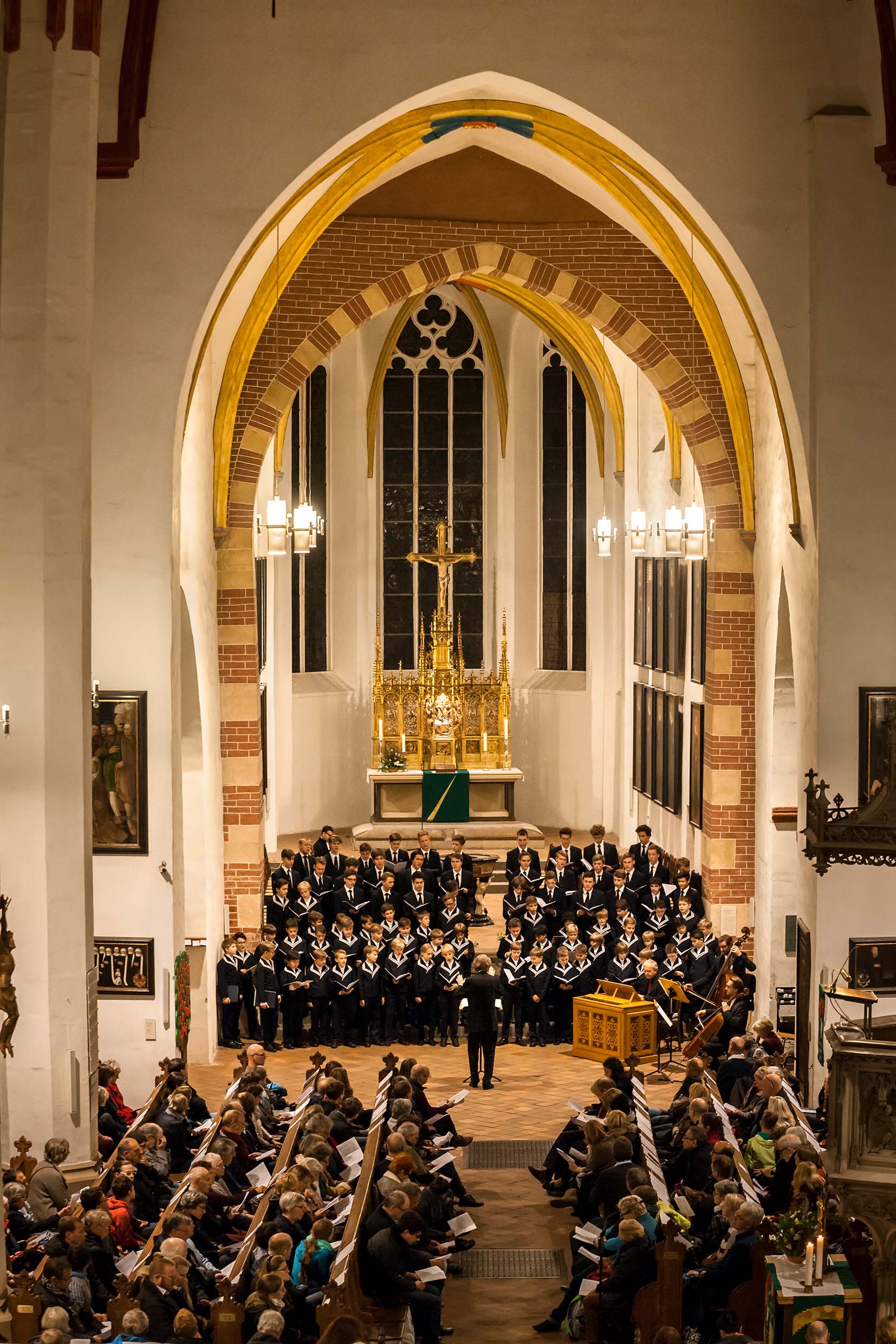
Trinitatis I or 1st Sunday after Trinitatis
Trinitatis I is the first Sunday after Trinitatis. Bach has three cantatas for you, all from the Leipzig period.
The first cantata, Die Elenden sollen essen, BWV 75, is remarkable because this is the first cantata Bach composed and performed when he took up his position as Thomaskantor in Leipzig. It was first performed in the Nikolaikirche on 30 May 1723. Because this was his first perfomance as cantor, he created a very ambitious cantata with no less than 14 movements. Because his first Leipzig cantata was on Trinitatis I, his three cycles start on that day. So one year later, on Trinitatis I 1724, Bach starts his second cantata cycle, the so called chorale cantata cycle because each cantata is based on a hymn from the Protestant liturgical tradition. Unfortunately this cycle abruptly ends in March 1725, probably because Bach''s preferred poet, Andreas Stübel, passed away in January of that year. O Ewigkeit, du Donnerwort, BWV 20, is a very elaborate cantata marking the start of this second cycle. It is based on a hymn by Johann Rist, which served also for the cantata O Ewigkeit, du Donnerwort, BWV 60, written not long before for Trinitatis XXIV (November 1723).
After Trinitatis I 1725, so at the start of his third cycle, Bach halved his tempo to a new cantata every 2 weeks, which means that Brich dem Hungrigen dein Brot, BWV 39, from 1726 is indeed still part of the third cycle.
Music for today
- Die Elenden sollen essen, BWV 75(first performance 30 May 1723, Leipzig period)
- O Ewigkeit, du Donnerwort, BWV 20(first performance 11 June 1724, Leipzig period)
- Brich dem Hungrigen dein Brot, BWV 39(first performance 23 June 1726, Leipzig period)
Playlist
WBC42-Trinitatis I