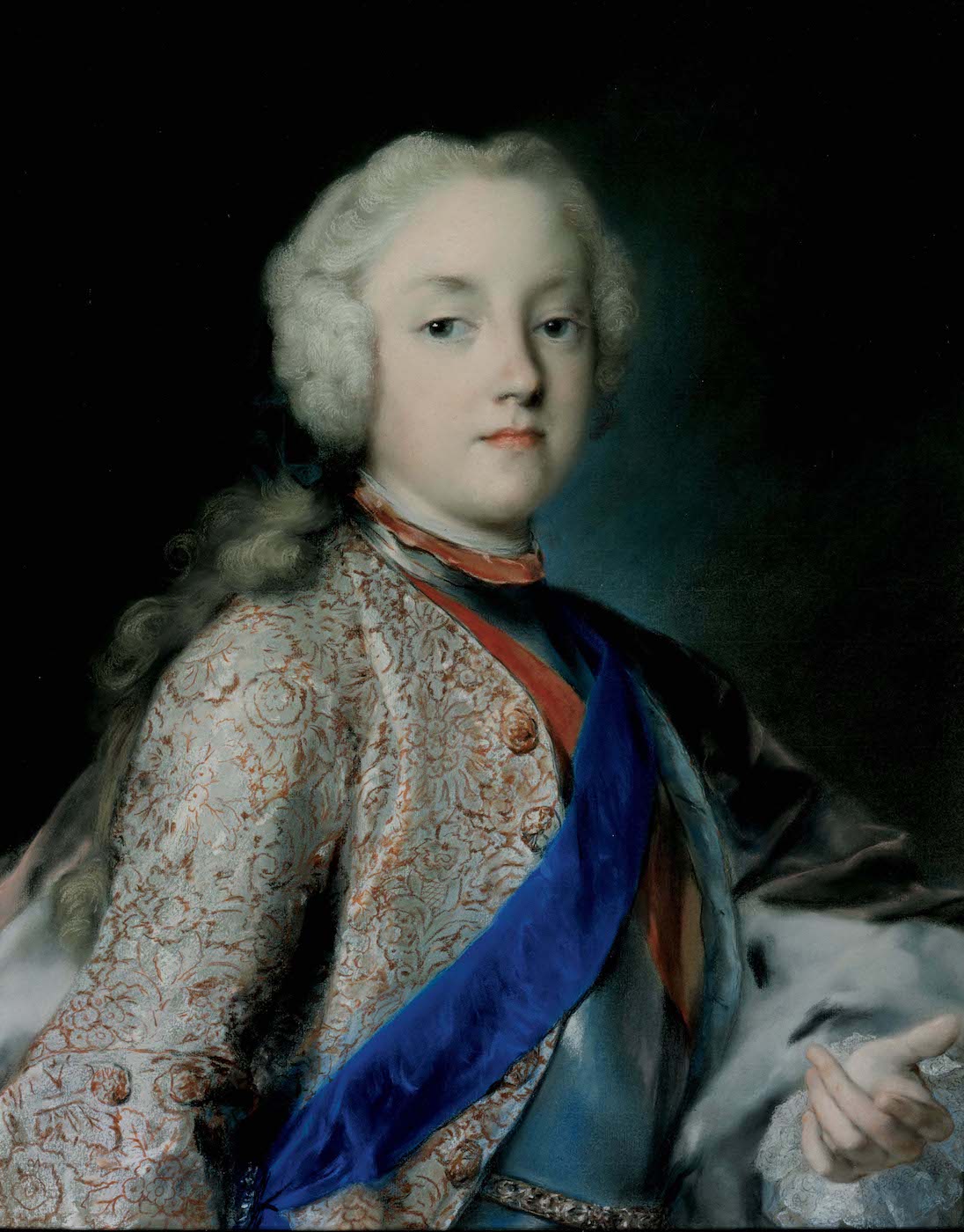
태자 Friedrich Christian von Saksen의 생일
Laßt uns sorgen, laßt uns wachen (Let us take care, let us watch over), BWV 213, is a secular cantata by Johann Sebastian Bach. Bach composed it in Leipzig on a text by Picander and first performed it on 5 September 1733 at the Café Zimmermann in Leipzig. It is also known as Die Wahl des Herkules (The choice of Hercules) and Hercules am Scheidewege (Hercules at the crossroads).
The cantata was composed for the 11th birthday of crown prince Friedrich Christian von Saksen, the son of Frederick Augustus II, Prince-Elector of Saxony and King of Poland.
You will no doubt recognise the opening chorus, because it is identical to the opening chorus of the 4th part of the Weihnachtsoratorium: Fallt mit Danken, fallt mit Loben, BWV 248 IV. And the aria 'Schlafe, mein Liebster' is a revised version of that same oratorium, now part II, the aria 'Schlafe, mein Liebster, genieße die Ruh'.
I would have appreciated a full Bach cantata for my eleventh birthday. I hope Friedrich Christian enjoyed his!
Laßt uns sorgen, laßt uns wachen (우리를 돌보자, 우리를 깨어있게 하자), BWV 213는 요한 세바스티안 Bach의 세속 칸타타이다. Bach는 Picander의 가사로 라이프치히에서 이를 작곡했으며 1733년 9월 5일 라이프치히의 Café Zimmermann에서 초연했다. 이는 Die Wahl des Herkules (헤라클레스의 선택)과 Hercules am Scheidewege (십자로의 헤라클레스)로도 알려져 있다.
이 칸타타는 작센의 황태자 Friedrich Christian von Saksen의 11번째 생일을 위해 작곡되었으며, 그는 작센 선제후이자 폴란드의 왕인 Frederick Augustus II의 아들이다.
당신은 의심할 여지없이 오프닝 합창을 인식할 것이다. 왜냐하면 그것이 Weihnachtsoratorium의 4번째 부분의 오프닝 합창과 동일하기 때문이다: Fallt mit Danken, fallt mit Loben, BWV 248 IV. 그리고 아리아 'Schlafe, mein Liebster'는 같은 오라토리움의 수정된 버전으로, 현재 2부의 아리아 'Schlafe, mein Liebster, genieße die Ruh'의 일부이다.
나는 내 11번째 생일에 완전한 Bach 칸타타를 받았으면 좋았을 것이다. Friedrich Christian이 즐겼기를 바란다!
오늘의 음악
- Laßt uns sorgen, laßt uns wachen, BWV 213(초연 5 9월 1733, Leipzig 시대)
재생목록
WBCF0905-Birthday crown prince Friedrich Christian von Saksen