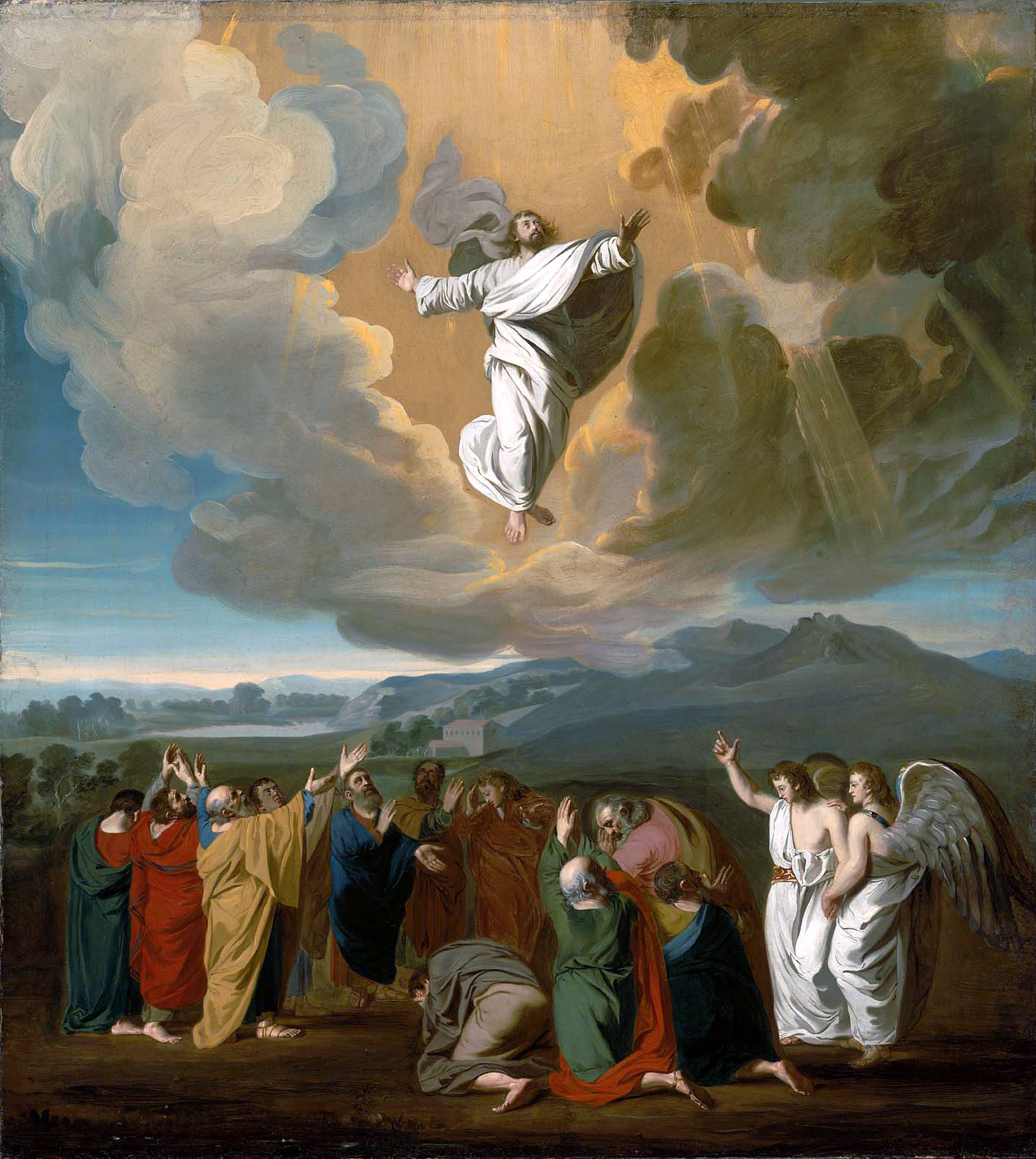
Ascension Day
Ascension Day is a very important date on the liturgical calendar, so no less than 4 cantatas for this day. All date from the Leipzig period.
Wer da gläubet und getauft wird, BWV 37, is based on the gospel of Mark, Jesus telling his disciples to preach and baptise, while Auf Christi Himmelfahrt allein, BWV 128, truly covers the Ascension itself. It is another libretto by Christiane Mariane von Ziegler, daughter of the mayor of Leipzig, who provided him with nine poems in 1725.
Gott fähret auf mit Jauchzen, BWV 43, is based on a text from a set of cantatas written by Bach''s far relative (their great-grandfathers were brothers), Johann Ludwig Bach (1677-1731). This text was probably written in 1704 by Ludwig''s employer, Duke Ernst-Ludwig von Sachsen-Meiningen.
The last one, Lobet Gott in seinen Reichen, BWV 11, is also known as the Ascension Oratorio, created in 1735, five months after the better known Christmas Oratorio and ten years after the initial Easter Oratorio. Although not longer than a regular cantata, it is structured like an oratorio, with a part for the evangelist.
Music for today
- Wer da gläubet und getauft wird, BWV 37(first performance 18 May 1724, Leipzig period)
- Auf Christi Himmelfahrt allein, BWV 128(first performance 10 May 1725, Leipzig period)
- Gott fähret auf mit Jauchzen, BWV 43(first performance 30 May 1726, Leipzig period)
- Lobet Gott in seinen Reichen, BWV 11(first performance 19 May 1735, Leipzig period)